Romain Gary
Sunday's Open for Debate

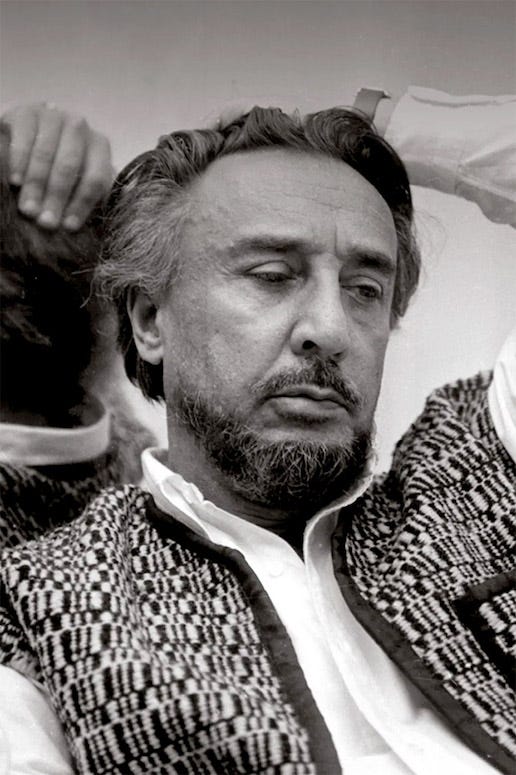
The year was 1975, and the question was in the air.
A reporter at the newspaper Sud-Ouest asked the novelist Romain Gary, ‘Do you think of yourself today as a completely French writer ?’ (”Vous considérez-vous aujourd’hui comme un écrivain totalement français ?”) How French are you, buddy ? The question received a heated response.
“Listen,” Gary shot back. “My origins are Russian, my mother was Jewish and my father Greek Orthodox, my first seven years were spent in Russia, followed by eight years in Poland. I’m steeped in Russian literature. My first literary effort was translating Pushkin into Polish. In France, I won first prize in French, and later joined the Royal Air Force, which gave me a feeling for the English language. There’s a song by Maurice Chevalier that goes, ‘And that, all of that, makes excellent Frenchmen.”
The adverb totalement is getting a strenuous workout here. It might be said to mean thoroughly or comprehensively, maybe unconditionally or altogether. I’m not sure what a totally or completely French writer means. Other candidates up Thesaurus Alley are utterly, sweepingly, meticulously but the only one that seems worthy of Gary is consummately French. I’m not sure what that means either.
How French is it, the reporter seems to want to ask. Lurking behind the question is of course another one, in what sense was Gary French ? Some journalists are picky. Mastery of the French language and two Goncourt prizes picked up along the way may not be enough. But sure, much of Gary’s humor strikes me as Jewish, and his embrace of the dark, ecstatic sides of human nature arguably Russian. He brought something new to French literature.
Whose identity as a man or a woman is reducible to any one thing ? Gary especially, not just because of his background but because he lived such a pleniform, adventurous life.
A persistantly popular and even beloved French writer, he dodges the question a bit, citing no classic immigrant tales à la Américain but rather the chansonnier Maurice Chevalier. The song Ça Fait D’Excellents Français depicts the backgrounds and hardships of French soldiers in WWI, not immigrants: Le colonel était dans le finance, Le commandant était dans l’industrie,’ etc. (The song gets better, and grosser, as it goes.)
Speaking only for myself, as someone who loves French culture and studies it habitually, I’ve never felt more American than when living here in France. I do my best, both ways.
History’s ghosts are always present à table. When wild-eyed culture warriors celebrate the coming ‘creolization’ of France while being sketchy on the details, traditionalists reply with some heat that it was a roughly thousand-year period, mid-900s to late 1800s when France forged its identity, when alien invasions were repelled and regions developed their idiosyncratic ways of doing things. (Brittany is not Normandy by a long shot, even if they share a border.) So what exactly do you have in mind, they ask. Algeria, they take pains to point out, forcibly repatriated 99% of the French, French sympathizers (Harkis) and Christians after their war for independence.
If nothing else, this extract from a 1975 interview makes clear that issues of identity, of how one belongs to oneself and one’s cultural surroundings, are hardly a new phenomenon. It isn’t an issue that ‘belongs’ to any one ‘political’ party. Assimilation is a bland word whose meaning everyone thinks they know without defining it. Integration is a bit of a game, really, a series of hurdles, an affront to your expectations, a test of how much you can adapt and still be you, with a judge at the end of the hall who either says, Go right, go left, or get out. You become a slightly different you. In the run-up to World War II, Arthur Koestler learned in less than a minute that his French papers, all in perfect order, were worthless. Gary had better luck – he could fly.
So, apart from the WWI poilu in the Chevalier song and Romain Gary, neither of whom are available for present-day cosplay, what constitutes a Frenchman or woman now ? I know a lovely lady whose parents came from Benin, whose eyes flicker with an adorable anger when I ask her if she’s really French. (Hard to tell who’s being more mischevous by that point in our amicable debate.) Born in the Corrèze, she’s more of one than I’ll ever be but still, I’m not thoroughly convinced. It requires, at the very least, a new definition of what it means to belong to a nation.
*
From the long list of the aviator-resistant-diplomat Romain Gary’s books: Forest of Anger (Éducation européenne), The Roots of Heaven (Goncourt, 1956), Promise at Dawn, The Dance of Genghis Cohn, The Life Before Us (a second Goncourt, 1975, under the pseudo Emile Ajar). And see if you can find Koestler’s Scum of the Earth, which tells a very different story.
2 XI 25